
Introduction
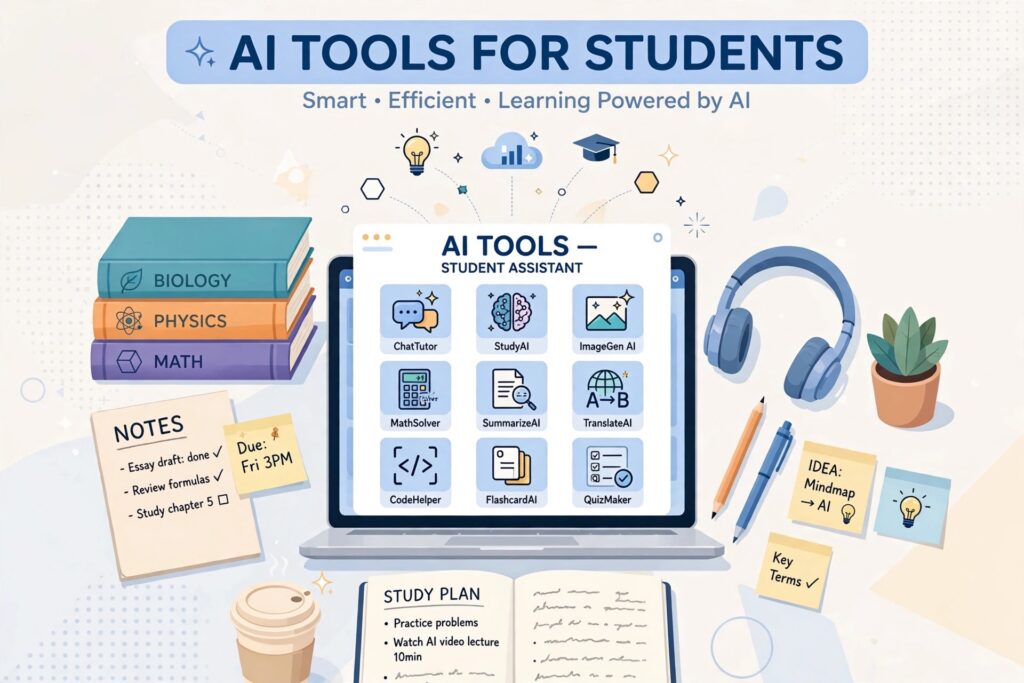
Artificial Intelligence (AI) is transforming the way students learn, research, write, organize tasks, and improve productivity. When used responsibly, AI tools can help students save time, strengthen learning, and develop valuable skills for their academic and professional journeys.
The goal of AI is not to replace learning but to support students in becoming more efficient and effective.
ChatGPT
ChatGPT is an AI-powered assistant that helps students generate ideas, explain complex topics, summarize information, and practice writing.
Students can use ChatGPT for:
• Research assistance
• Brainstorming ideas
• Study support
• Writing guidance
• Learning difficult concepts
It is important to verify information and use the tool responsibly.
Grammarly
Grammarly helps students improve their writing by identifying grammar mistakes, spelling errors, punctuation issues, and clarity problems.
Benefits include:
• Grammar correction
• Writing improvement
• Tone suggestions
• Proofreading support
Grammarly is particularly useful for essays, reports, assignments, and professional communication.
Canva AI
Canva provides AI-powered design features that help students create presentations, posters, infographics, resumes, and social media graphics.
Students can use Canva to:
• Create academic presentations
• Design project materials
• Build portfolios
• Develop professional visuals
The platform is beginner-friendly and widely used by students and professionals.
Google Gemini
Google Gemini is an AI assistant that helps users with research, writing, brainstorming, and information gathering.
Students can use Gemini to:
• Explore new topics
• Generate ideas
• Understand concepts
• Improve productivity
Like all AI tools, information should be reviewed and verified before use.
Notion AI
Notion AI helps students organize notes, manage tasks, summarize content, and improve productivity.
Useful features include:
• Note organization
• Study planning
• Project management
• Content summarization
• Personal productivity tracking
It is particularly valuable for students managing multiple academic responsibilities.
Using AI Responsibly
AI tools should support learning rather than replace it.
Students should:
• Verify AI-generated information
• Avoid plagiarism
• Use AI as a learning aid
• Develop independent thinking skills
• Follow institutional academic policies
Responsible use helps maximize the benefits of AI while maintaining academic integrity.
Conclusion
AI tools can help students improve productivity, strengthen learning, and manage academic responsibilities more effectively. By combining these tools with critical thinking and responsible study habits, students can achieve better educational outcomes and prepare for future opportunities.
Important Note
AI-generated content should always be reviewed for accuracy and originality. Students should comply with their institution’s academic integrity policies and use AI responsibly in all educational activities.