
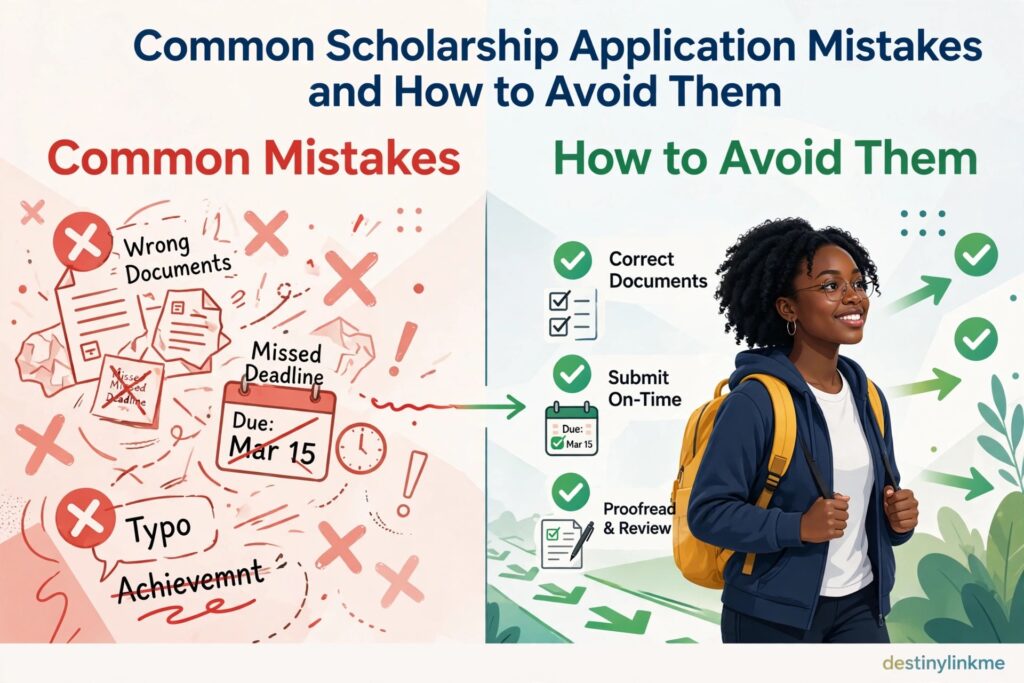
Every year, thousands of students apply for scholarships with the hope of financing their education and achieving their academic goals. While many applicants meet the eligibility requirements, a significant number are rejected due to avoidable mistakes during the application process.
In many cases, scholarship committees are not only looking for qualified candidates but also for applicants who can follow instructions, communicate effectively, and submit complete applications.
Understanding common scholarship application mistakes can help you avoid unnecessary errors and improve your chances of success.
This guide highlights common scholarship application mistakes and provides practical strategies for avoiding them.
Why Scholarship Applications Get Rejected
Many applicants assume that scholarships are awarded primarily based on academic performance. While grades are important, scholarship committees often evaluate multiple factors including leadership, communication skills, motivation, completeness of application materials, and attention to detail.
Even strong applicants can be rejected when avoidable mistakes weaken their applications.
• Incomplete applications
• Weak essays
• Missed deadlines
• Poor preparation
• Failure to follow instructions
• Lack of supporting evidence
1. Applying Without Reading the Requirements
One of the most common mistakes applicants make is rushing into an application without carefully reviewing the eligibility requirements.
Some applicants spend hours completing forms only to discover later that they do not meet the criteria.
HOW TO AVOID IT
• Read all eligibility requirements
• Review scholarship guidelines carefully
• Confirm you meet the criteria
• Understand required documents
• Note important deadlines
2. Missing the Application Deadline
Late applications are often rejected automatically, regardless of the applicant’s qualifications.
Many students wait until the last minute, increasing the risk of technical issues, missing documents, or incomplete submissions.
HOW TO AVOID IT
• Record deadlines immediately
• Set reminders
• Prepare documents early
• Submit before the final day
3. Submitting an Incomplete Application
Missing documents are one of the quickest ways to damage an application.
Scholarship providers often require specific supporting materials.
Examples include:
• Academic transcripts
• Recommendation letters
• Personal statements
• Motivation letters
• Identification documents
• Passport photographs
A missing document may result in disqualification.
4. Using Generic Scholarship Essays
Many applicants use the same essay for multiple scholarships without adapting it to the specific requirements.
Selection committees can often recognize generic responses.
HOW TO AVOID IT
• Understand the essay prompt
• Customize each essay
• Use relevant examples
• Connect your goals to the scholarship
• Demonstrate genuine interest
5. Poor Grammar and Spelling
Writing errors can create a negative impression and reduce the professionalism of your application.
Grammar mistakes may also make it difficult for reviewers to understand your message.
HOW TO AVOID IT
• Proofread multiple times
• Use grammar-checking tools
• Ask someone to review your work
• Read your essay aloud
6. Weak Recommendation Letters
Some applicants choose referees who know very little about them or request recommendation letters too late.
Weak recommendations can reduce the strength of an otherwise competitive application.
HOW TO AVOID IT
• Choose suitable referees
• Request letters early
• Provide relevant information
• Give referees sufficient preparation time
7. Failing to Demonstrate Impact
Many applicants describe activities without explaining the results or impact achieved.
For example, simply stating that you volunteered is less effective than explaining how your volunteer work benefited others.
HOW TO AVOID IT
• Use measurable achievements
• Include outcomes
• Highlight leadership contributions
• Explain community impact
8. Ignoring Application Instructions
Scholarship providers often include specific instructions regarding document formats, word limits, file names, and submission procedures.
Ignoring these instructions can result in rejection.
HOW TO AVOID IT
• Read application instructions carefully
• Check formatting guidelines
• Follow word limits
• Use requested file formats
• Review submission requirements
9. Having Unclear Goals
Many scholarship applications ask candidates about their future ambitions.
Vague or poorly defined goals can weaken your application.
HOW TO AVOID IT
• Define career goals
• Explain academic interests
• Connect goals to the scholarship
• Demonstrate long-term vision
10. Waiting Until Opportunities Appear Before Preparing
Many students only begin gathering documents after finding a scholarship opportunity.
This often creates unnecessary pressure and delays.
HOW TO AVOID IT
• Maintain an updated CV
• Organize important documents
• Keep academic records ready
• Prepare personal statements
• Build a scholarship-ready profile
Practical Tips for Scholarship Success
• Start preparing early
• Research opportunities carefully
• Stay organized
• Customize applications
• Track deadlines
• Maintain an achievement portfolio
• Continue developing skills and leadership experience
Frequently Asked Questions (FAQs)
Can a small mistake cause scholarship rejection?
Yes. Some scholarship providers automatically reject incomplete applications or submissions that fail to follow instructions.
What is the most common scholarship application mistake?
Missing deadlines, submitting incomplete applications, and ignoring eligibility requirements are among the most common mistakes.
How early should I start preparing for scholarships?
Ideally, preparation should begin long before opportunities are announced. Building a strong profile takes time.
Do scholarship committees check recommendation letters?
Yes. Recommendation letters are often an important part of the evaluation process and can influence decision-making.
Scholarship Application Success Checklist
CHECKLIST
✅ Eligibility Requirements Reviewed
✅ Application Guidelines Read Carefully
✅ Documents Prepared
✅ Deadline Recorded
✅ Essay Customized
✅ Recommendation Letters Secured
✅ Grammar and Spelling Checked
✅ Goals Clearly Explained
✅ Instructions Followed
✅ Application Reviewed Before Submission
Downloadable Resource
📥 Download the Scholarship Application Success Checklist PDF to help you avoid common mistakes and submit stronger applications.
(Downloadable resource coming soon.)
Final Thoughts
Scholarship success is not only about qualifications. It is also about preparation, organization, attention to detail, and the ability to present yourself effectively.
Many scholarship applications are rejected because of mistakes that could have been easily avoided. By understanding these common errors and taking proactive steps to avoid them, you can improve the quality of your applications and increase your chances of success.
Remember: strong applicants prepare thoroughly, follow instructions carefully, and submit complete applications.