
Introduction
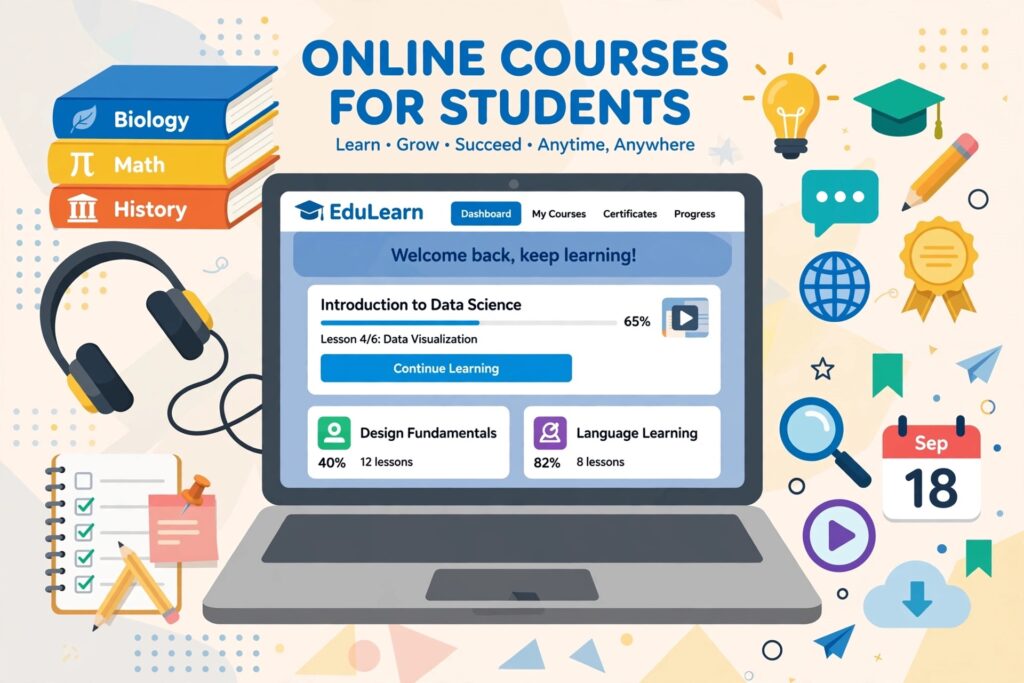
Online courses have transformed the way people learn and develop skills. Today, students and professionals can access high-quality education from anywhere in the world using a smartphone, tablet, or computer.
Whether you want to improve your academic knowledge, develop technical skills, or prepare for a career change, online courses provide flexible learning opportunities that can support your personal and professional growth.
Benefits Of Online Learning
Online courses offer several advantages compared to traditional classroom learning.
Benefits include:
• Flexible learning schedules
• Access to global instructors
• Affordable learning options
• Self-paced study opportunities
• Professional skill development
These benefits make online learning suitable for students, job seekers, and working professionals.
Popular Online Learning Platforms
Many reputable platforms provide high-quality online courses.
Examples include:
• Coursera
• edX
• Udemy
• FutureLearn
• LinkedIn Learning
• Khan Academy
These platforms offer courses in subjects ranging from business and technology to healthcare, education, and personal development.
Choosing The Right Course
Before enrolling in an online course, consider your goals and learning needs.
Ask yourself:
• What skills do I want to develop?
• How will this course support my career goals?
• Does the course provide a certificate?
• Is the course offered by a reputable institution?
Selecting the right course ensures that your learning efforts align with your long-term objectives.
Developing In-Demand Skills
Online courses provide opportunities to develop skills that are highly valued by employers.
Examples include:
• Data Analysis
• Digital Marketing
• Project Management
• Software Development
• Graphic Design
• Communication Skills
• Leadership
Building these skills can improve employability and career prospects.
Staying Consistent
Success in online learning requires discipline and consistency.
Consider:
• Creating a study schedule
• Setting realistic learning goals
• Taking notes during lessons
• Completing assignments
• Reviewing lessons regularly
Consistent effort leads to better learning outcomes and skill retention.
Tracking Your Progress
Monitor your learning journey by keeping records of completed courses, certificates, and acquired skills.
Tracking progress can help maintain motivation and demonstrate continuous learning to employers and professional networks.
Conclusion
Online courses provide an accessible and flexible way to gain knowledge, develop valuable skills, and advance your career. By selecting quality courses and maintaining a consistent learning routine, learners can unlock new opportunities for personal and professional growth.
Important Note
While certificates can be valuable, employers often focus on the skills and knowledge gained through learning. Prioritize developing practical abilities and applying what you learn in real-world situations.